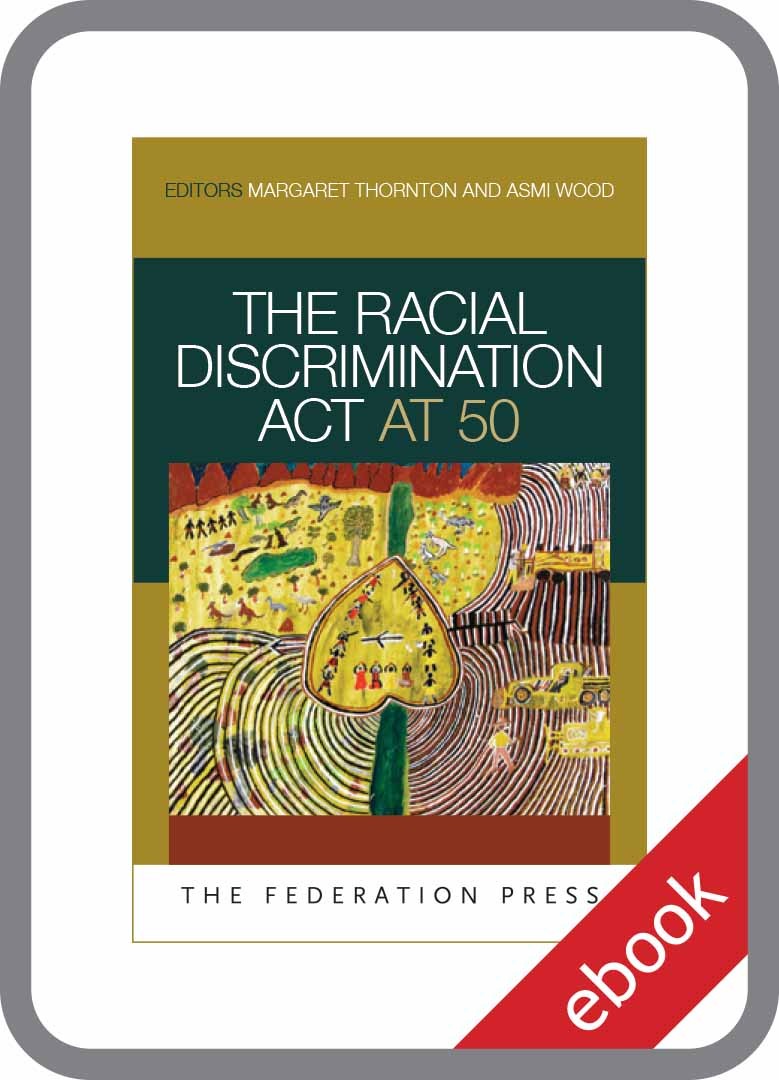
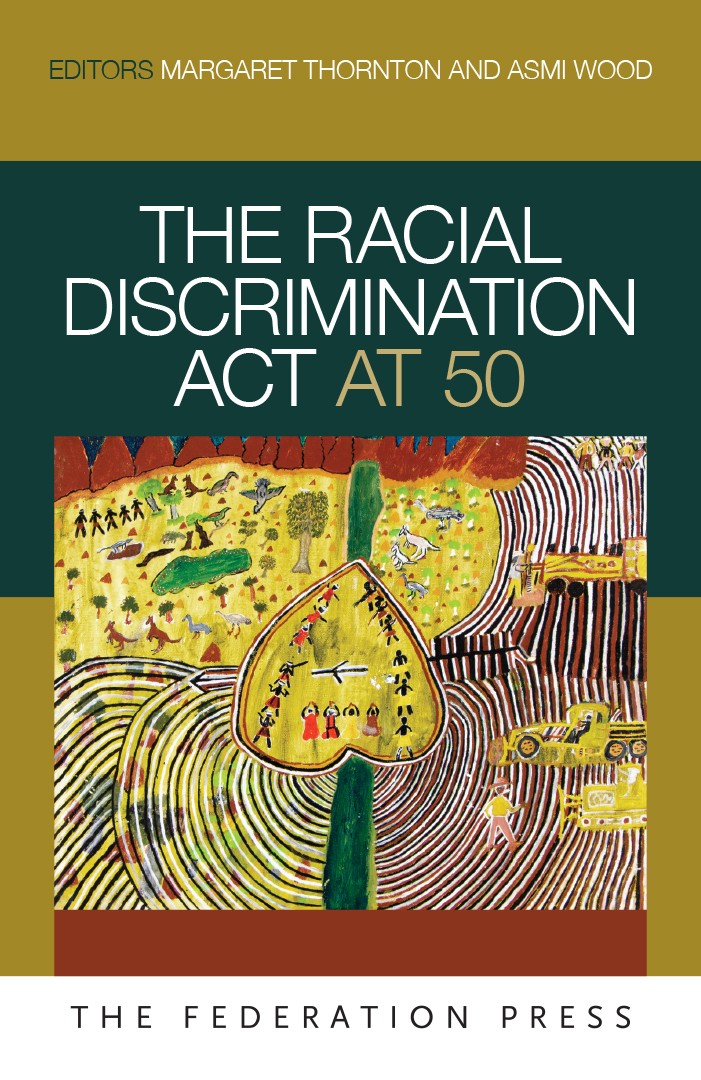
The Racial Discrimination Act at 50 is a collection of socio-legal essays by experts in race discrimination and racism. The essays were first presented at a symposium to mark the 50th anniversary of the RDA in 2025 held at the Australian National University.
The authors critically evaluate the strengths and weaknesses of the Act from a range of perspectives, addressing issues of constitutionalism, the limitations of the Act and scrutiny of its operation by parliamentary committees, together with its effectiveness in addressing issues such as complaint-handling, vilification, employment in remote Indigenous communities and the representation of the visual.
Several essays look to the future in thinking creatively about issues such as climate change, the intersection of race with variables such as age and sex, and the power to engage in treaties and negotiate in the shadow of the law.
While the RDA was in the forefront internationally at the time of its inception, it has tended to fall behind as many jurisdictions, including the Australian states and territories, have updated their legislation. The RDA has been largely resistant to reform. It is hoped that these essays might also shine a light on areas that need to be updated and encourage the shaping of a revamped RDA.
Foreword by Hugh de Kretser, President of the Australian Human Rights Commission
Acknowledgments
About the Contributors
1 Introduction: The Unfulfilled Promise of the Racial Discrimination Act – Margaret Thornton
2 Why the Racial Discrimination Act Cannot Deliver for Indigenous Peoples: The Constitutional Race Power and Australia’s International Obligations – Asmi Wood
3 Courts’ Institutional Discomfort: Section 10 and Equality Before the Law – Simon Rice
4 The Invisibility of Race in the Debate Concerning Section 18C of the Racial Discrimination Act – Bill Swannie
5 Parliamentary Committees’ Engagement with the Racial Discrimination Act – Sarah Moulds
6 Negotiating in the Shadow of (and Beyond) the Racial Discrimination Act – Harry Hobbs
7 Adapting the Racial Discrimination Act to a Changing Climate? – Cristy Clark and Beth Goldblatt
8 When Law Cannot See: Visual Racialisation and the Future of the Racial Discrimination Act – Dorota Gozdecka
9 Entwined Histories: The Racial Discrimination Act and Remote Indigenous Employment – Will Sanders and Francis Markham
10 Building the Case: Litigating the Racial Discrimination Act – Dominique Allen
11 Beyond Formal Equality: Reconsidering Fisher v Commonwealth Through an Intersectional Lens of Race, Age, and Life Expectancy – Alice Taylor
12 Race, Gender and Class: Intersectionality in the Context of the Racial Discrimination Act – Margaret Thornton
Index
Cover artwork credit
Jack Green (Garrwa people, born Wakaiya Country, on Soudan Station, NT, 1953)
Heart of Country, 2013
Acrylic on canvas, 66 x 84 cm.
Purchased, 2014
ANU Art Collection.
© Jack Green/Copyright Agency, 2026
Story of the artwork by Jack Green
The heart represents the life of the country. It’s the heart of Aboriginal people and the country, together, as one. Through the heart runs a river. Rivers are really important places for us. In the middle of the heart are the four clan groups of the Borroloola region. Lined up are four people sittin’ down. They are the singers. In red are Yanyawa, black and red Mara, yellow one Gudanji and brown Garrwa. Above them in the heart are their dancers. It’s through our song and dance that we all pass the knowledge of the country. Above the heart is what the country used to be like. Beautiful, with everything there for us, lots of bush-tucker and water. On the left-hand side at the top are four people. This is the mining company and government. They work together, lookin’ out for each other. Below them are the drilling rig, grader and dozer belonging to the mining companies who are comin’ into to our country and damaging it with all their machinery. People and bush-tucker get pushed aside having to move somewhere else, sometimes dyin’. You can see the area around the miners is empty – no bush-tucker and no Aboriginal people. No good.