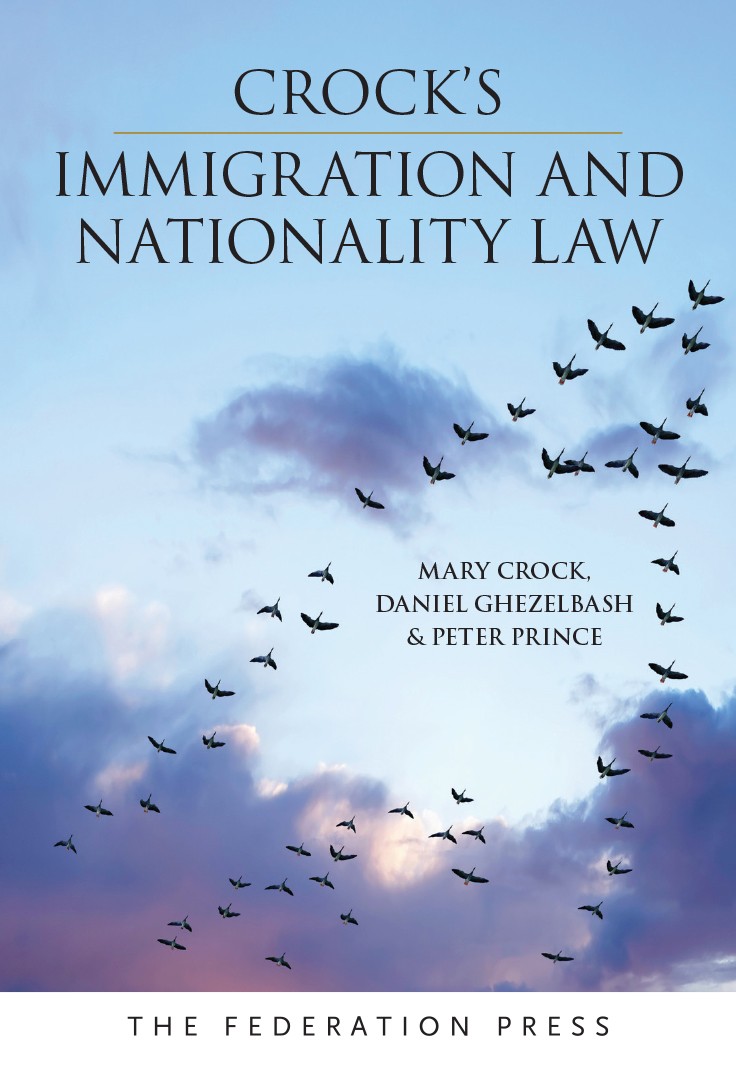
Crock’s Immigration and Nationality Law does more than capture contemporary intricacies of how non-citizens enter and remain in Australia. It shows that migration law is not – and never has been – just about regulating cross-border movement of people. It has played an extraordinary role in shaping Australian society and Australians’ understanding of citizenship and the balance of powers in a parliamentary democracy. It has determined who is recognised as belonging, while simultaneously forcing re-consideration of the relationship between Parliament, the Executive and the courts. The authors explore the history and political and social context behind the laws and policies to create a record that endures beyond current vicissitudes.
The book begins with an exploration of how Australia’s colonial origins have shaped concepts of citizenship and community membership, illustrated by case law on exclusion and expulsion. These themes are developed in chapters on citizenship and passport laws, followed by an examination of the evolution of frameworks for immigration governance. The authors then address core elements of Australian immigration law including character and health criteria; family and economic migration; visa cancellation; detention and removal; and merits and judicial review. They also explore new themes – including automated decision-making, artificial intelligence, and the role of trade agreements in migration policy. Refugee and humanitarian laws will be examined in a companion volume to be released in late 2026.
Designed as a teaching text, practitioner reference and scholarly account, the book provides a comprehensive analysis of Australia’s immigration and nationality laws, offering students, practitioners, policy makers and researchers an authoritative guide to this field.